Home / Questions / Platform risk
Is my crypto exchange licensed? How to read the register
The licence that matters belongs to one named company, covers named activities, and applies in named countries. All three have to line up with you.
You need to check the exact company named in your contract. Its permission must cover the service you want and the country where you live. A footer that says "licensed and regulated" can refer to another company in the same group, so a brand name alone cannot answer this question.
Start with the terms of use, then follow the official lookup for your jurisdiction below. Compare the company name, current status, permitted services and contact details before sending money.
Where do you live?
Licensed, registered, authorised: three words that promise different things
Exchanges use these words interchangeably in their marketing. Regulators do not.
Registered can mean that a firm filed its details with a regulator, or that it passed an assessment for a limited purpose. FinCEN's MSB listing and the FCA's anti-money-laundering registration involve different checks, as the sections below explain. Read the regulator's description of the status; the word alone does not tell you whether customer assets are protected.
Licensed or authorised usually means the regulator granted permission to carry on a specific activity and supervises how the firm does it: capital, custody of client assets, conduct, complaints. That is the stronger status, and it is always tied to particular activities. A firm can be authorised to exchange crypto for money and not to offer lending, or authorised for payments and not for crypto at all.
So when a platform says it is regulated, the follow-up questions are: by whom, as what, and which of its companies?
Which company are you actually signing up with?
An exchange may use different legal entities for different countries or services while keeping the same brand on its app. Your address and the service you choose can affect which company contracts with you.
Find the terms of use or user agreement, usually linked at the bottom of the site, and look for the paragraph that names the contracting party: wording like "these terms are between you and [company name], a company incorporated in…". Copy that exact name and any registration number. That company, and no other, is the one you will search for in the registers below. If the terms name one company for some countries and another for the rest, read which applies to you.
A sister company's licence does not establish that your contracting company has the permission it needs. Compare each licence claim with the entity and service in your agreement, rather than treating a list of jurisdictions as permission for the entire group.
How to check a crypto exchange in the US
There are two layers, federal and state, and they mean different things.
Federal registration with FinCEN. Businesses that exchange or transmit crypto for customers generally register as money services businesses with the Financial Crimes Enforcement Network, and anyone can search the list on its MSB Registrant Search page. Treat a hit as the bare minimum. FinCEN says so itself: "The inclusion of a business on the MSB Registration Web site is not a recommendation, certification of legitimacy, or endorsement of that business by any government agency," and "FinCEN does not verify information submitted by the MSB" (FinCEN). A platform that waves its MSB number around as proof of safety is leaning on a list that was never meant to carry that weight.
State licences. The supervision that touches your money mostly happens at state level, typically through money transmitter licences. Many states record these in NMLS Consumer Access, where you can search the company name and see which states have licensed it. Look for your own state. Coverage of that database varies by state and licence type, so if the company does not appear, check your state financial regulator's own website before drawing a conclusion.
New York runs its own regime. The Department of Financial Services publishes its list of licensed and chartered entities, including BitLicense holders and approved limited purpose trust companies. Search for the company in your agreement. If it is missing, check the DFS requirements for that entity and service before relying on a licence claim about the wider group.
How to check a crypto exchange in the UK
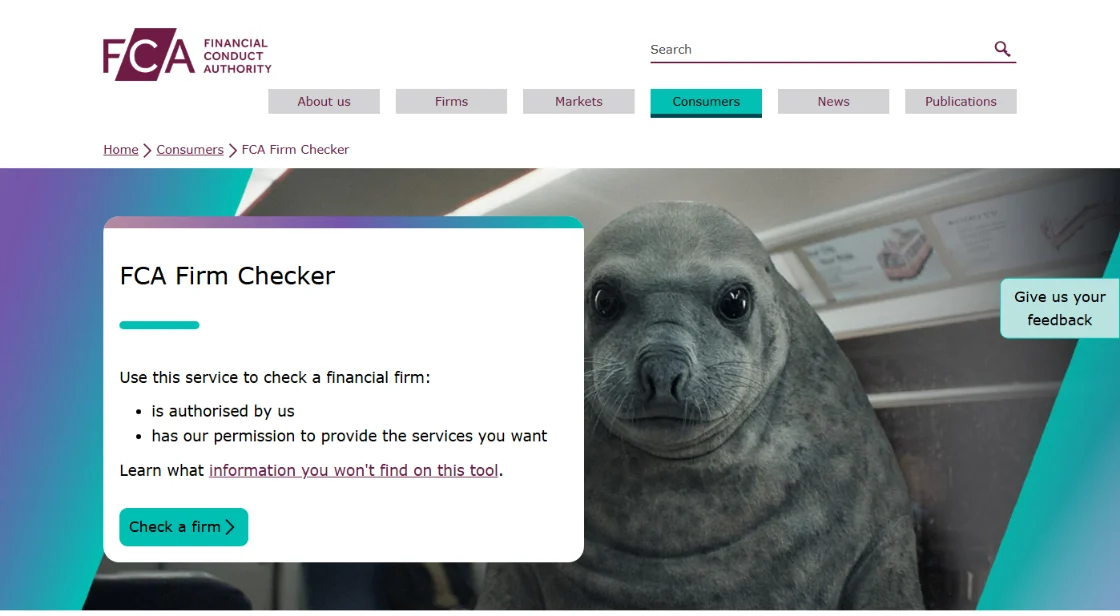
Search the contracting company's exact name or firm reference number on the FCA's Financial Services Register. Open its record and read the current status, cryptoasset registration and any restrictions. Compare its website and contact details with the platform you intend to use. The Firm Checker is a simpler tool for consumer financial services, but the FCA says it omits published restrictions relating to crypto activities. Use the full register for those details.
Under the current money-laundering regime, firms carrying on in-scope crypto business in the UK must register with the FCA. The FCA explains the limits of this registration: it covers anti-money-laundering supervision and does not by itself give customers Financial Ombudsman Service or Financial Services Compensation Scheme protection. A firm's permission for another financial service does not automatically extend those protections to its crypto services.
Checked in October 2026: the FCA's new regime page confirms that the Cryptoassets Regulations were made on 4 February 2026. The new regime is expected to start on 25 October 2027, with FCA authorisation required for the activities it covers. Applying for that authorisation, or holding an existing AML registration, is not the same as already having it.
The FCA also warns about clone firms: scammers copy a real firm's name and registration number but supply their own phone number, email and website. Use the contact details in the regulator's records to verify who you are dealing with. If the listed website differs from the one you are about to sign up on, stop and resolve the mismatch before sending money.
How to check a crypto exchange in the EU under MiCA
The EU's Markets in Crypto-Assets regulation sets common rules for the crypto-asset services it covers. The European Securities and Markets Authority publishes an interim MiCA register as downloadable files, updated weekly from what national regulators report. Search both the crypto-asset service-provider file and the non-compliant-entities file for the company name from your terms. Some existing financial institutions, including banks, can provide crypto services through the Article 60 notification route rather than a separate CASP authorisation, so read the basis and scope of the entry.
Firms that operated under older national rules could keep going during a transition, but only until 1 July 2026 at the latest, or until their MiCA application was decided, whichever came first. That window has closed. A pre-MiCA national registration alone is no longer enough for covered services. If the ESMA file has no entry, check the national regulator's current record too: ESMA warns that newly reported information may not appear immediately in its weekly update.
The entry may well show a regulator in a country other than yours. That can be fine. Under Article 65 of MiCA, a provider authorised in its home country can serve other member states after notifying its home regulator, which passes the notice on to the host countries and to ESMA. Check that your country is among those the firm has notified; national regulators often publish the notifications they receive.
What a clean register entry still leaves open
A valid entry can show which company is registered or authorised, for which activities and by whom. It establishes that status; it does not certify the platform's safety.
A supervised exchange can still be hacked, mismanaged or wound up. A registration or licence does not itself insure your crypto. Check the insurance question separately, including which assets and services any protection covers. And read how exchanges have lost customer money even after the register check passes.
The record identifies a regulator you can report concerns to. Check the firm's complaints procedure and which independent complaints body, if any, can consider your service. A foreign licence may mean dealing with an overseas regulator or court; neither a local nor a foreign regulator guarantees that you will recover your money.
If you cannot find the exchange on any register
Search the regulator's warning list too. The FCA, many EU regulators and US state regulators publish lists of firms operating without permission, and a platform appearing there settles the question quickly.
A missing entry does not prove fraud. First check the legal name, any trading names, and whether the regulator requires permission for that service. If you cannot verify a required permission, pause before depositing. A foreign licence does not establish local supervision, but a missing local entry does not mean goodwill is your only possible remedy either: recovery may involve contractual claims or legal proceedings abroad. Establish which company and jurisdiction you would have to deal with before taking that risk.
If a person, rather than an advert, pointed you to the platform, the register lookup sits alongside the other checks in how to judge a recommendation. And if the platform looks fine but you are unsure the site or app in front of you is really its own, that is a separate test: spotting a fake app or website.
Last checked October 15, 2026. Spotted something wrong? Write to the desk — anything we get wrong ends up on the corrections page.